3-溴-4-氟甲苯

  • 基本信息
  • 制备方法及用途
  • 物化性质
  • 安全信息
  • 毒理性
  • MSDS
  • 海关数据
  • 结构与计算化学
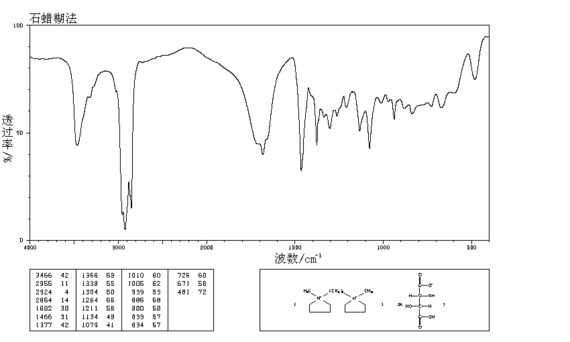
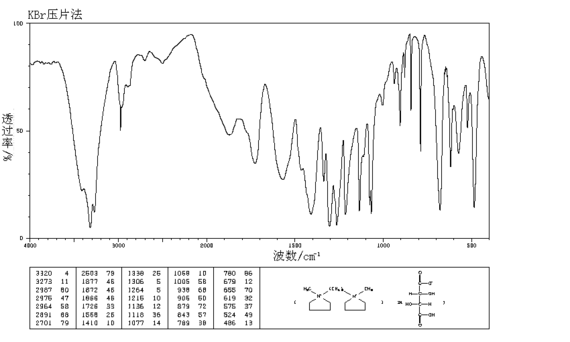
  • 表征图谱

3-溴-4-氟甲苯 基本信息

中文名称:
3-溴-4-氟甲苯 
中文别名:
3-溴-4-氟甲苯;
五醇INIUM 酒石酸盐;
酒石酸喷托铵 
英文名称:
3-Bromo-4-fluorotoluene
英文别名:
pentolinium tartrate;
pentamethylene-bis(1-methyl-pyrrolidinium) ditartrate;
pentolinium ditartrate;
mb2050a;
ansolysen;
Pentamethylen-bis(1-methyl-pyrrolidinium)-ditartrat;
Pentolinium tartrate;
Pentolonium tartrate;
ansolysentartrate;
pentaliniumtartrate;
PENTOLINIUM TARTRATE;
pentolinium bitartrate;
pentilium;
Pentolonium;
ansolysenbitartrate 
CAS No.:
52-62-0
分 子 式:
C7H6BrF
分 子 量:
538.59
精确分子量:
538.27400
PSA:
235.78000
MDL:
MFCD00135580
EINECS:
200-146-7
InChI:
The Key: UUHCLXMGGNCRFV-UHFFFAOYSA-M
风险术语:
R36/37/38; R22
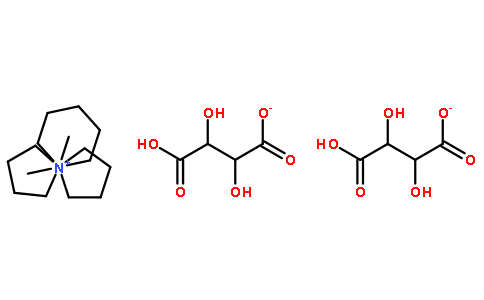
分子结构式:
SDS:
查看

3-溴-4-氟甲苯 制备方法及用途

制备方法

医药。农药。液晶材料的中间体。

用途简介

用途

医药。农药。液晶材料的中间体。

3-溴-4-氟甲苯 物化性质

熔点:
215ºC
存储条件/存储方法:

本品应密封避光保存。

其它信息:

1.       性状:无色至微黄色液体。

2.       密度(g/mL,25/4℃):1.507

3.       相对蒸汽密度(g/mL,空气=1):未确定

4.       熔点(ºC):328-329

5.       沸点(ºC,常压):未确定

6.       沸点(ºC,5.2kPa):169℃(756mmHg

7.       折射率:1.5310

8.       闪点(ºC):73

9.       比旋光度(º):未确定

10.    自燃点或引燃温度(ºC):未确定

11.    蒸气压(kPa,25ºC):1.68mPa

12.    饱和蒸气压(kPa,60ºC):未确定

13.    燃烧热(KJ/mol):未确定

14.    临界温度(ºC):未确定

15.    临界压力(KPa):未确定

16.    油水(辛醇/水)分配系数的对数值:未确定

17.    爆炸上限(%,V/V):未确定

18.    爆炸下限(%,V/V):未确定

19.    溶解性:溶于水。

3-溴-4-氟甲苯 安全信息

包装等级:
III
风险类别:
6.1(b)
海关代码:
2933990090
危险类别码:
36/37/38-22
RTECS号:
UY4900000
危险标志:
Xn

3-溴-4-氟甲苯 毒理性

CHEMICAL IDENTIFICATION

RTECS NUMBER :
UY4900000
CAS REGISTRY NUMBER :
52-62-0
LAST UPDATED :
199012
DATA ITEMS CITED :
8
MOLECULAR FORMULA :
C15-H32-N2.2C4-H6-O6
MOLECULAR WEIGHT :
540.69
WISWESSER LINE NOTATION :
T5KTJ A1 A5- AT5KTJ A1 &QVYQYQVO 2

HEALTH HAZARD DATA

ACUTE TOXICITY DATA

TYPE OF TEST :
LD50 - Lethal dose, 50 percent kill
ROUTE OF EXPOSURE :
Oral
SPECIES OBSERVED :
Rodent - rat
DOSE/DURATION :
890 mg/kg
TOXIC EFFECTS :
Details of toxic effects not reported other than lethal dose value
REFERENCE :
PSEBAA Proceedings of the Society for Experimental Biology and Medicine. (Academic Press, Inc., 1 E. First St., Duluth, MN 55802) V.1- 1903/04- Volume(issue)/page/year: 120,511,1965
TYPE OF TEST :
LD50 - Lethal dose, 50 percent kill
ROUTE OF EXPOSURE :
Intraperitoneal
SPECIES OBSERVED :
Rodent - rat
DOSE/DURATION :
28900 ug/kg
TOXIC EFFECTS :
Details of toxic effects not reported other than lethal dose value
REFERENCE :
JAPMA8 Journal of the American Pharmaceutical Association, Scientific Edition. (Washington, DC) V.29-49, 1940-60. For publisher information, see JPMSAE. Volume(issue)/page/year: 46,346,1957
TYPE OF TEST :
LD50 - Lethal dose, 50 percent kill
ROUTE OF EXPOSURE :
Intravenous
SPECIES OBSERVED :
Rodent - rat
DOSE/DURATION :
50760 ug/kg
TOXIC EFFECTS :
Details of toxic effects not reported other than lethal dose value
REFERENCE :
SKNEA7 Shionogi Kenkyusho Nenpo. Annual Report of Shionogi Research Laboratory. (Shionogi Seiyaku K.K. Kenkyusho, 5-12-4 Sagisu, Fukushima-ku, Osaka 553, Japan) No.1- 1951- Volume(issue)/page/year: 10,15,1960
TYPE OF TEST :
LD50 - Lethal dose, 50 percent kill
ROUTE OF EXPOSURE :
Oral
SPECIES OBSERVED :
Rodent - mouse
DOSE/DURATION :
512 mg/kg
TOXIC EFFECTS :
Details of toxic effects not reported other than lethal dose value
REFERENCE :
NIIRDN Drugs in Japan (Ethical Drugs). (Yakugyo Jiho Co., Ltd., Tokyo, Japan) Volume(issue)/page/year: 6,780,1982
TYPE OF TEST :
LD50 - Lethal dose, 50 percent kill
ROUTE OF EXPOSURE :
Intraperitoneal
SPECIES OBSERVED :
Rodent - mouse
DOSE/DURATION :
36 mg/kg
TOXIC EFFECTS :
Details of toxic effects not reported other than lethal dose value
REFERENCE :
NIIRDN Drugs in Japan (Ethical Drugs). (Yakugyo Jiho Co., Ltd., Tokyo, Japan) Volume(issue)/page/year: 6,780,1982
TYPE OF TEST :
LDLo - Lowest published lethal dose
ROUTE OF EXPOSURE :
Subcutaneous
SPECIES OBSERVED :
Rodent - mouse
DOSE/DURATION :
94 mg/kg
TOXIC EFFECTS :
Details of toxic effects not reported other than lethal dose value
REFERENCE :
CLDND* Compilation of LD50 Values of New Drugs. (J.R. MacDougal, Dept. of National Health and Welfare, Food and Drug Divisions, 35 John St., Ottawa, Ont., Canada)
TYPE OF TEST :
LD50 - Lethal dose, 50 percent kill
ROUTE OF EXPOSURE :
Intravenous
SPECIES OBSERVED :
Rodent - mouse
DOSE/DURATION :
29 mg/kg
TOXIC EFFECTS :
Details of toxic effects not reported other than lethal dose value
REFERENCE :
NIIRDN Drugs in Japan (Ethical Drugs). (Yakugyo Jiho Co., Ltd., Tokyo, Japan) Volume(issue)/page/year: 6,780,1982
TYPE OF TEST :
LD50 - Lethal dose, 50 percent kill
ROUTE OF EXPOSURE :
Intravenous
SPECIES OBSERVED :
Mammal - dog
DOSE/DURATION :
10 mg/kg
TOXIC EFFECTS :
Lungs, Thorax, or Respiration - respiratory depression
REFERENCE :
JAPMA8 Journal of the American Pharmaceutical Association, Scientific Edition. (Washington, DC) V.29-49, 1940-60. For publisher information, see JPMSAE. Volume(issue)/page/year: 46,346,1957
毒理学数据:

1、急性毒性:大鼠经口LD50890mg/kg;大鼠腹腔LD5028900ug/kg;大鼠静脉LD5050760ug/kg;小鼠经口LD50512mg/kg

3-溴-4-氟甲苯 MSDS

Name: Pentolinium Tartrate 99% Material Safety Data Sheet
Synonym:
CAS: 52-62-0
Section 1 - Chemical Product   MSDS Name:Pentolinium Tartrate 99% Material Safety Data Sheet
Synonym:

Section 2 - COMPOSITION, INFORMATION ON INGREDIENTS
CAS# Chemical Name content EINECS#
52-62-0 Pentolinium Tartrate 99% 200-146-7
Hazard Symbols: None Listed.
Risk Phrases: None Listed.

Section 3 - HAZARDS IDENTIFICATION
  EMERGENCY OVERVIEW
Not available.
Potential Health Effects
Eye:
May cause eye irritation.
Skin:
May cause skin irritation.
Ingestion:
May cause irritation of the digestive tract. May be harmful if swallowed.
Inhalation:
May cause respiratory tract irritation.
Chronic:
No information found.

Section 4 - FIRST AID MEASURES
  Eyes: Flush eyes with plenty of water for at least 15 minutes, occasionally lifting the upper and lower eyelids. Get medical aid.
Skin:
Get medical aid. Flush skin with plenty of water for at least 15 minutes while removing contaminated clothing and shoes. Wash clothing before reuse.
Ingestion:
Never give anything by mouth to an unconscious person. Get medical aid. Do NOT induce vomiting. If conscious and alert, rinse mouth and drink 2-4 cupfuls of milk or water.
Inhalation:
Remove from exposure and move to fresh air immediately. If not breathing, give artificial respiration. If breathing is difficult, give oxygen. Get medical aid.
Notes to Physician:

Section 5 - FIRE FIGHTING MEASURES
  General Information:
As in any fire, wear a self-contained breathing apparatus in pressure-demand, MSHA/NIOSH (approved or equivalent), and full protective gear. During a fire, irritating and highly toxic gases may be generated by thermal decomposition or combustion. Runoff from fire control or dilution water may cause pollution.
Extinguishing Media:
Use agent most appropriate to extinguish fire. Use water spray, dry chemical, carbon dioxide, or appropriate foam.

Section 6 - ACCIDENTAL RELEASE MEASURES
  General Information: Use proper personal protective equipment as indicated in Section 8.
Spills/Leaks:
Vacuum or sweep up material and place into a suitable disposal container. Clean up spills immediately, observing precautions in the Protective Equipment section. Avoid generating dusty conditions.
Provide ventilation.

Section 7 - HANDLING and STORAGE
  Handling:
Wash thoroughly after handling. Remove contaminated clothing and wash before reuse. Use with adequate ventilation. Minimize dust generation and accumulation. Avoid contact with eyes, skin, and clothing. Keep container tightly closed. Avoid ingestion and inhalation.
Storage:
Keep container closed when not in use. Store in a tightly closed container. Store in a cool, dry, well-ventilated area away from incompatible substances.

Section 8 - EXPOSURE CONTROLS, PERSONAL PROTECTION
  Engineering Controls:
Facilities storing or utilizing this material should be equipped with an eyewash facility and a safety shower. Use adequate ventilation to keep airborne concentrations low.
Exposure Limits CAS# 52-62-0: Personal Protective Equipment Eyes: Wear appropriate protective eyeglasses or chemical safety goggles as described by OSHA's eye and face protection regulations in 29 CFR 1910.133 or European Standard EN166.
Skin:
Wear appropriate protective gloves to prevent skin exposure.
Clothing:
Wear appropriate protective clothing to minimize contact with skin.
Respirators:
Follow the OSHA respirator regulations found in 29 CFR 1910.134 or European Standard EN 149. Use a NIOSH/MSHA or European Standard EN 149 approved respirator if exposure limits are exceeded or if irritation or other symptoms are experienced.

Section 9 - PHYSICAL AND CHEMICAL PROPERTIES
 
Physical State: Powder
Color: white
Odor: Not available.
pH: Not available.
Vapor Pressure: Not available.
Viscosity: Not available.
Boiling Point: Not available.
Freezing/Melting Point: 213 deg C
Autoignition Temperature: Not applicable.
Flash Point: Not applicable.
Explosion Limits, lower: Not available.
Explosion Limits, upper: Not available.
Decomposition Temperature:
Solubility in water:
Specific Gravity/Density:
Molecular Formula: C23H42N2O12
Molecular Weight: 538.58

Section 10 - STABILITY AND REACTIVITY
  Chemical Stability:
Stable under normal temperatures and pressures.
Conditions to Avoid:
Incompatible materials, dust generation, excess heat, strong oxidants.
Incompatibilities with Other Materials:
Oxidizing agents.
Hazardous Decomposition Products:
Nitrogen oxides, carbon monoxide, irritating and toxic fumes and gases, carbon dioxide, nitrogen.
Hazardous Polymerization: Has not been reported

Section 11 - TOXICOLOGICAL INFORMATION
  RTECS#:
CAS# 52-62-0: UY4900000 LD50/LC50:
CAS# 52-62-0: Oral, mouse: LD50 = 512 mg/kg; Oral, rat: LD50 = 890 mg/kg.
Carcinogenicity:
Pentolinium Tartrate - Not listed by ACGIH, IARC, or NTP.
Other:
See actual entry in RTECS for complete information.

Section 12 - ECOLOGICAL INFORMATION
 

Section 13 - DISPOSAL CONSIDERATIONS
  Dispose of in a manner consistent with federal, state, and local regulations.

Section 14 - TRANSPORT INFORMATION
 
IATA
Not regulated as a hazardous material.
IMO
Not regulated as a hazardous material.
RID/ADR
Not regulated as a hazardous material.

Section 15 - REGULATORY INFORMATION
 
European/International Regulations
European Labeling in Accordance with EC Directives
Hazard Symbols: Not available.
Risk Phrases:
Safety Phrases:
S 24/25 Avoid contact with skin and eyes.
WGK (Water Danger/Protection)
CAS# 52-62-0: No information available.
Canada
None of the chemicals in this product are listed on the DSL/NDSL list.
CAS# 52-62-0 is not listed on Canada's Ingredient Disclosure List.
US FEDERAL
TSCA
CAS# 52-62-0 is not listed on the TSCA inventory.
It is for research and development use only.


SECTION 16 - ADDITIONAL INFORMATION
N/A

3-溴-4-氟甲苯 海关数据

中国海关编码:2933990090

概述:
2933990090. 其他仅含氮杂原子的杂环化合物. 增值税率:17.0%. 退税率:13.0%. 监管条件:无. 最惠国关税:6.5%. 普通关税:20.0%
申报要素:
品名, 成分含量, 用途, 乌洛托品请注明外观, 6-己内酰胺请注明外观, 签约日期
摘要/Summary:
2933990090. heterocyclic compounds with nitrogen hetero-atom(s) only. VAT:17.0%. Tax rebate rate:13.0%. . MFN tariff:6.5%. General tariff:20.0%

3-溴-4-氟甲苯 分子结构与计算化学数据

计算化学数据

1、   疏水参数计算参考值(XlogP):

2、   氢键供体数量:6

3、   氢键受体数量:12

4、   可旋转化学键数量:10

5、   互变异构体数量:

6、   拓扑分子极性表面积(TPSA):236

7、   重原子数量:37

8、   表面电荷:0

9、   复杂度:347

10、同位素原子数量:0

11、确定原子立构中心数量:0

12、不确定原子立构中心数量:4

13、确定化学键立构中心数量:0

14、不确定化学键立构中心数量:0

15、共价键单元数量:3

推荐供应商更多供应商>>

淄博航宇生物科技发展有限公司

产品介绍:
产品名称:3-溴-4-氟甲苯 Cas号:52-62-0 纯度:99% 包装信息:100kg 价格:洽谈
联系方式:
联系人:张经理 电话:15666366704 手机:15666366704

郑州杰克斯化工产品有限公司

产品介绍:
产品名称:3-溴-4-氟甲苯 Cas号:52-62-0 纯度: 包装信息:洽谈 价格:洽谈
联系方式:
联系人:许伟伟 电话:0371-86259281 手机:15981966935

上海一基实业有限公司

产品介绍:
产品名称:3-溴-4-氟甲苯 Cas号:52-62-0 纯度: 包装信息:洽谈 价格:洽谈
联系方式:
联系人:张嘉彬 电话:021-60536261 17802116021 手机:17802116021

阜新翔宇化工科技发展有限公司

产品介绍:
产品名称:3-溴-4-氟甲苯 Cas号:52-62-0 纯度: 包装信息:洽谈 价格:洽谈
联系方式:
联系人:王经理 电话:0418-2868000 手机:15941878711 15841809000

青州市奥星化工有限公司

产品介绍:
产品名称:3-溴-4-氟甲苯 Cas号:52-62-0 纯度: 包装信息:洽谈 价格:洽谈
联系方式:
联系人:宋治会 电话:0536-3877199 手机:13356750138

南京朗全科技实业有限公司

产品介绍:
产品名称:3-溴-4-氟甲苯 Cas号:52-62-0 纯度: 包装信息:洽谈 价格:洽谈
联系方式:
联系人: 电话:025-84341022 手机:
QQ: 2241752642
微信二维码
电话: 19906633110